growing up, looking back
September - October, 2023

These were some of my busiest months I remember. Between trips to NYC, Nashville, and Seattle, we found an apartment in NYC, signed a lease, sold furniture, and planned the logistics of our move — this week (!) — a couple months earlier than expected. Eeek. Moving to New York has been a dream of mine since high school, and I still can’t believe it’s happening. For months I’ve been scared to jinx it, but now…it’s happening!
Still, it’s bittersweet to leave Boston, and it’s alarming that three and a half years went by so quickly. Why does time seem to always be accelerating? I understand the math, that each day is a smaller fraction of our life than the day before was. And while we can’t do anything about that, I find comfort in activities like reading that seem to slow time down a bit. I have read that our brains are designed to record change, and another reason life as a child can feel so slow is due to the many experiences most young people have in a single day, e.g. learning new things at school, going to ballet class, or visiting a new friend’s house. All these activities fitting into that limited time can make it seem more plentiful looking back.
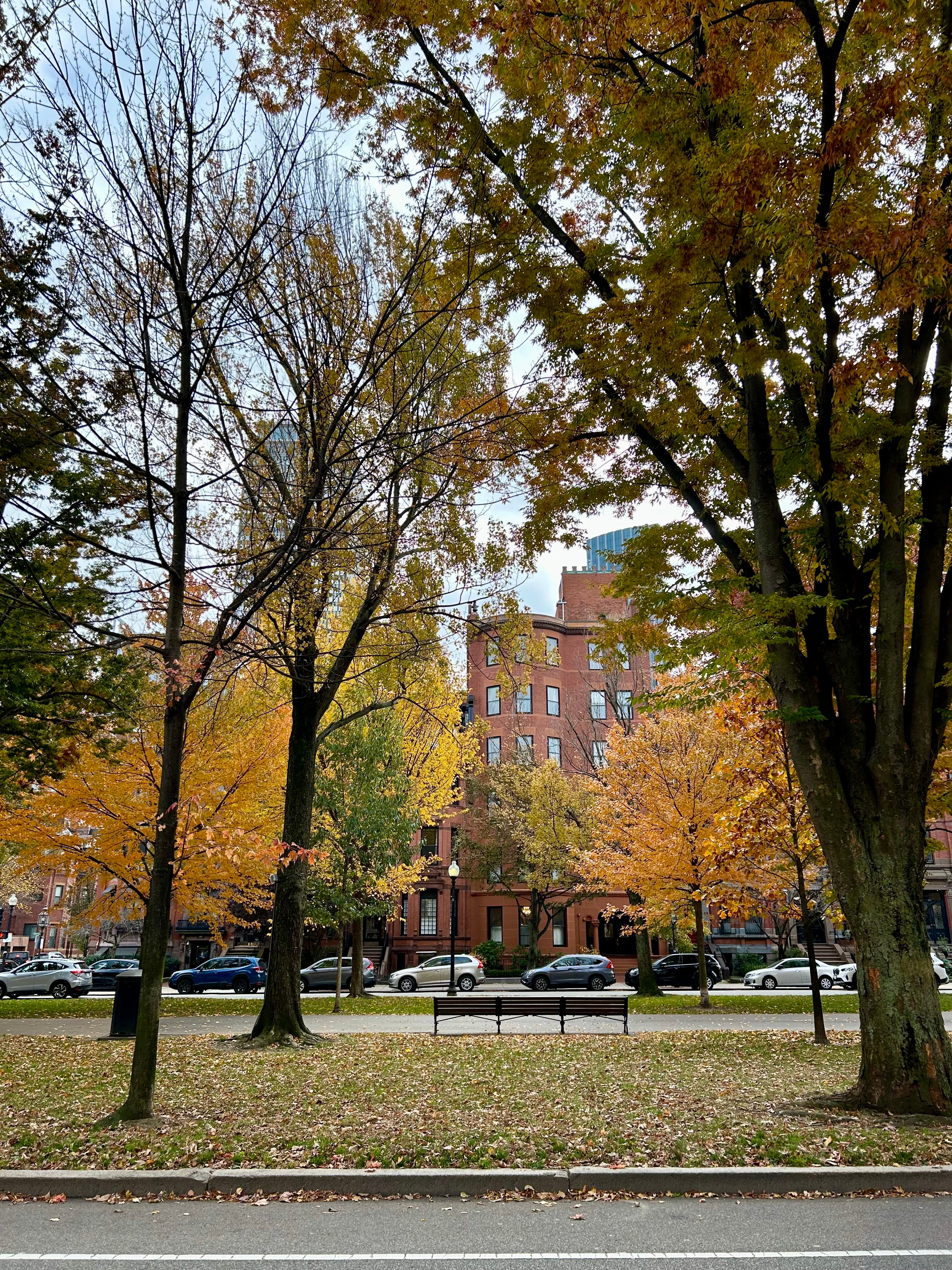
But this can apply as adults, too. When we look back on a time period filled with lots of new experiences, the memories make the time seem to stretch out, more than for a period marked by monotony. Amidst work days, I do feel like we jam packed so many things into our Boston life. And I hope that the many new experiences in our next home will make time seem more plentiful.
All too say, I’ve been busy, and I did not read too much this fall. But I had some fun reading, generally about ladies looking back themselves. Thanks for reading!
Today’s Menu:
Ghosts, Everything I Know About Love, Glossy, The Fraud, The Woman in Me
Dolly Alderton’s Ghosts (2022) starts on Nina’s 32nd birthday. (Not knowing this, I started reading it on my 32nd birthday. So, I was inclined to feel connected from the start.) She’s a food writer, living and working in London; she recently bought her own flat, her friends are increasingly scattering, with life choices, incomes, and geography creating new and uncomfortable wedges between them. “Young adulthood had quickly turned into just plain adulthood–with its daily list of choices to confirm who I was, how I voted, who my broadband provider was.” And she is also an only child, dealing with aging parents. Having been in a relationship for most of her twenties and then purposefully single for a few years after, she has never used a dating app before but is convinced by her token single friend Lola that she must. So we embark on this new experience with her, on which her commentary is insightful and delightful.
“There was the evidence, in all these profiles, where who we really are and who we’d like everyone to think we are were in such unsubtle tension. How clear it suddenly was that we are all the same organs, tissue and liquids packaged up in one version of a million cliches, who all have insecurities and desires; the need to feel nurtured, important, understood and useful in one way or another. None of us are special. I don’t know why we fight it so much.”
Predictably Nina meets someone, and predictably he's not as perfect as he initially seems. This book is both sad and funny. But the saddest parts are not about her romantic relationships but about her ailing father and more generally the pains of growing up.
“Getting older was an increasingly perplexing thing, but these moments–understanding that potential future memories were being taken from you year on year, like road closures–were the very worst of it.”
“I would make a strong case for the argument that every adult on this earth is sitting on a bench waiting for their parents to pick them up, whether they know it or not. I think we wait until the day we die.”
The funniest parts generally involve her friend Lola: “The truth was, I very rarely knew what Lola meant when she said ‘you know what I mean?,’ but I found her so entertaining, I never wanted to signal at a platform where her train of thought could stop.”
I loved Nina and Dolly, saw both as lovable and insightful friends, and really enjoyed this book. In this admirably cohesive novel Alderton captures something so specific so well, and I give a book so much credit when it makes me laugh.
Guest Contributor Alec Fletcher: The Fraud (2023) by Zadie Smith concerns Eliza Touchet, cousin by marriage to nineteenth-century British writer William Ainsworth, whom Zadie Smith lovingly portrays just as she lampoons the over-the-top historical and fantastic novels that he writes and, at one point, made him more famous than Charles Dickens. Eliza, a widow who lives with William and supports his household, is the only Catholic in the home. Her religion, her semi-monied widowhood, her nearness to the literary life, her sexual adventurousness (she harbors love and lust for both William’s dead first wife and William himself; these latter escapes are described somewhat flippantly by Smith) and–crucially–her gender all join to create a unique perspective, especially in the times that she lived. This is historical fiction, written about people who are all long dead (Eliza, in reality, died long before many of the events in this book), but with all that makes her unique, Eliza bristles with life, often seeming like an avatar for Smith, regardless of differences in race and millennia. Eliza looks at the world critically. She is unafraid to join a women-led section of the British abolitionist movement, and she considers life through a moral, questioning lens, one akin to many nineteenth-century novels of ‘moral’ realism, perhaps epitomized by Middlemarch, a novel that Eliza herself admires.
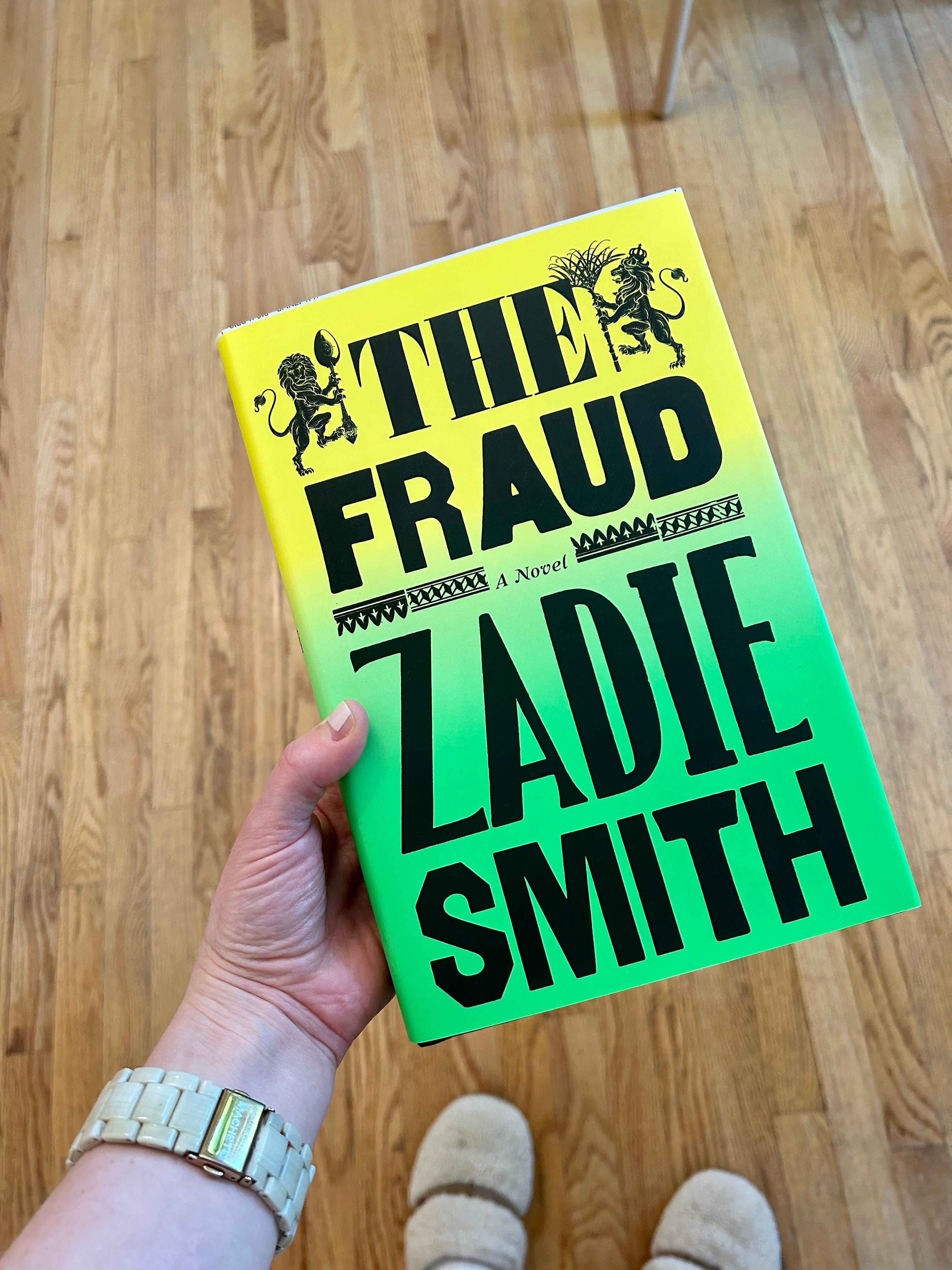
The novel’s central plot involves Eliza’s growing interest in the Ticheborne Claimant, a man who claimed to be a dead-by-shipwreck aristocrat. Though to all rational observation this was clearly false, and Ticheborne and his coterie were clearly a pack of self-interested liars, he gathered an immense British following, uniting the lower class who wanted to believe that this was a wronged man, fighting the injustice of the wealthy and powerful. There is an obvious Trump analogue here, and Eliza’s fascination with the Andrew Bogle, a former slave who acts as Ticheborne’s most-convincing ally, one can picture any ‘humanistic’ liberal’s fascination with those who become enthralled with untruthful, manipulating demagogues. Eliza’s fascination with Bogle becomes one instance of a larger, nearly impossible project, one that literature can, perhaps, most possibly attain: the understanding of other people. (Andrea Long Chu’s review of The Fraud in Vulture, which contends with Smith’s larger turn away from the ‘hysterical realism’ of White Teeth toward humanistic realism, does a great job of re-considering the value of this type of introspective, moral, protagonist; though ultimately I disagree with her contention that White Teeth is the better novel.)
Parts of The Fraud felt like comfort food to a specific type of reader: lovers of nineteenth-century moral realism, a.k.a. me. Yet even so, some of Eliza’s introspective questioning can feel a bit phoned-in. “One lifetime was not enough to understand a people and the words they used and the way they thought and lived.” “A person is a bottomless thing!” And the Ticheborne plot, filtered through Eliza’s authorial interest, is compelling but does not sum up to something larger than its parts.
Yet Smith is, of course, a skilled writer, and her central characters, Eliza and William, leap off the page. More than anything, it is time that does it. Though at any given moment William is a bit of an annoying, washed-up graphomaniac, after living several decades with each other, he is, to Eliza, her best and, in many ways, only friend. Growing old, Eliza gains wisdom and perspective. That’s one thing that novels can accomplish; in four hundred pages, full lives can be lived.
Taste test: “We mistake each other. Our whole social arrangement a series of mistakes and compromises. Shorthand for a mystery too large to be seen. If they knew what I knew they would feel as I do! Yet even once one had glimpsed behind the veil which separates people, as she had - how hard it proves to keep the lives of others in mind! Everything conspires against it. Life itself.”
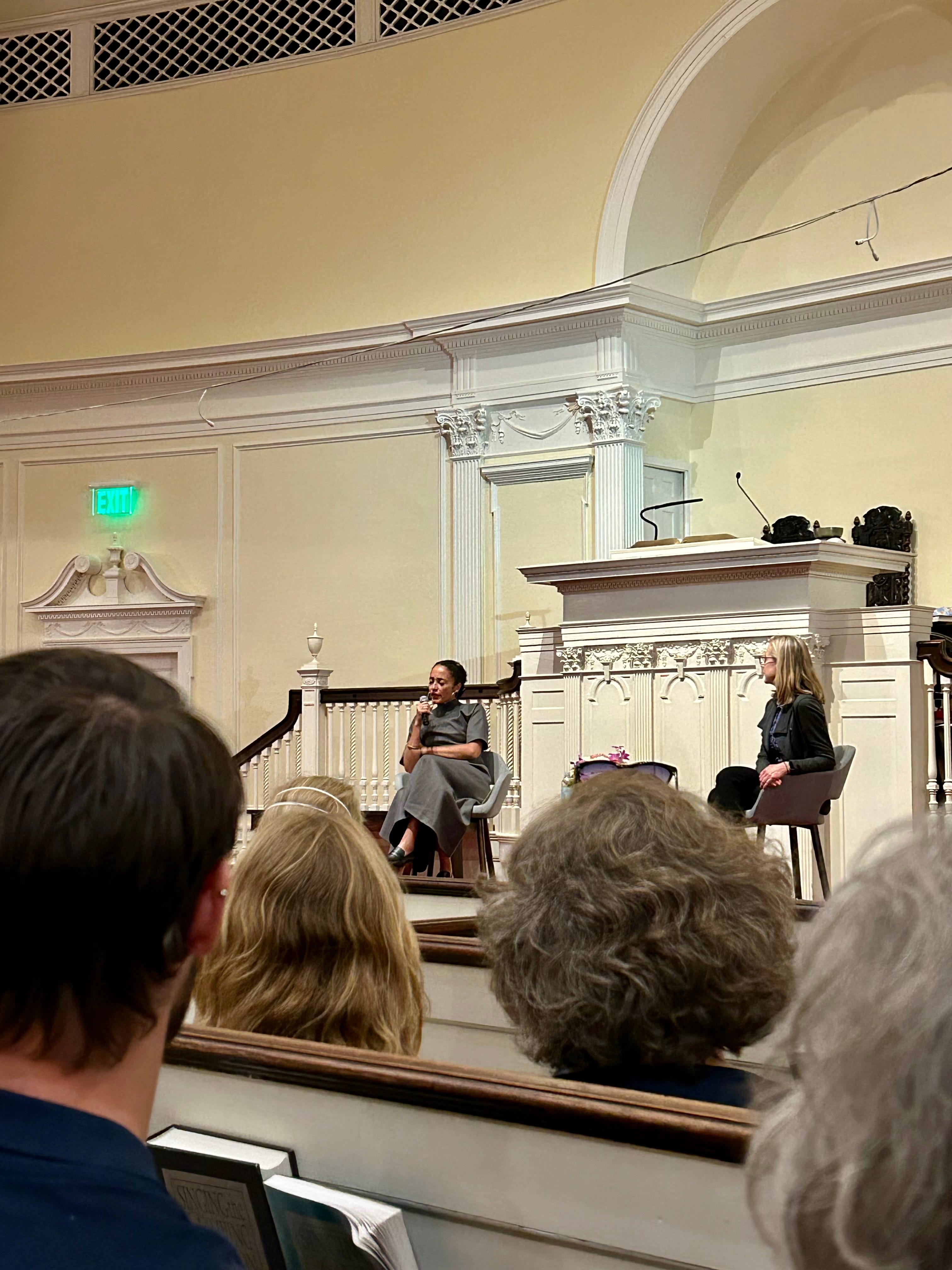
P.S. Got to hear Zadie read/speak!
SPECIAL ITEMS
If you somehow haven’t heard, Britney Spears has a new memoir, The Woman in Me. I did not plan to read this until I heard Michelle Williams was narrating, and at only around five hours I found it well worth a listen. It started a bit slow, but pretty soon I was completely engrossed, and then in turn heartbroken and enraged.
Although it may largely have been written by a ghost writer I feel she did such a good job capturing Britney’s voice and her emotions and reactions to all she went through since her meteoric rise to fame when she was only 15 years old. I was shocked by how truly selfish seemingly everyone around her was - Justin Timberlake, the paparazzi, Kevin Federline, her father, mother, and sister. It’s a dog-eat-dog world, but it’s upsetting that no one could empathize enough to protect her. I’m thoroughly convinced her father is the scum of the earth and should rot in jail, and I wish not much more for the others. I hope she finds some peace and people to support her. And honestly highly recommend listening - Michelle Williams is brilliant and Britney’s story, while just one and not the most tragic, is such a glaring failure of modern society and celebrity and the legal system that I think everyone should be aware of.
Taste test: “My father shoved aside my bowl of receipts, setting up his things on the bar. ‘I just want to let you know,’ he said, ‘I call the shots. You sit right there in that chair and I’ll tell you what goes on.’
I looked at him with a growing sense of horror.
’I’m Britney Spears now,’ he said.”
I didn’t quite know what to make of this Glossy (2023). I relate to Marisa Meltzer’s fascination with Emily Weiss, but I was often turned off by her tone: it seemed like she felt that she needed to produce a hot take and decided that the thesis tying her novel together should be the question of whether Weiss deserves the success she's had or not. I find this question neither that interesting nor that answerable - I would have been happy to read about Weiss and the history of Into the Gloss turned Glossier, without this overtone of suspicion, which felt at times sexist, but more often just cringey.
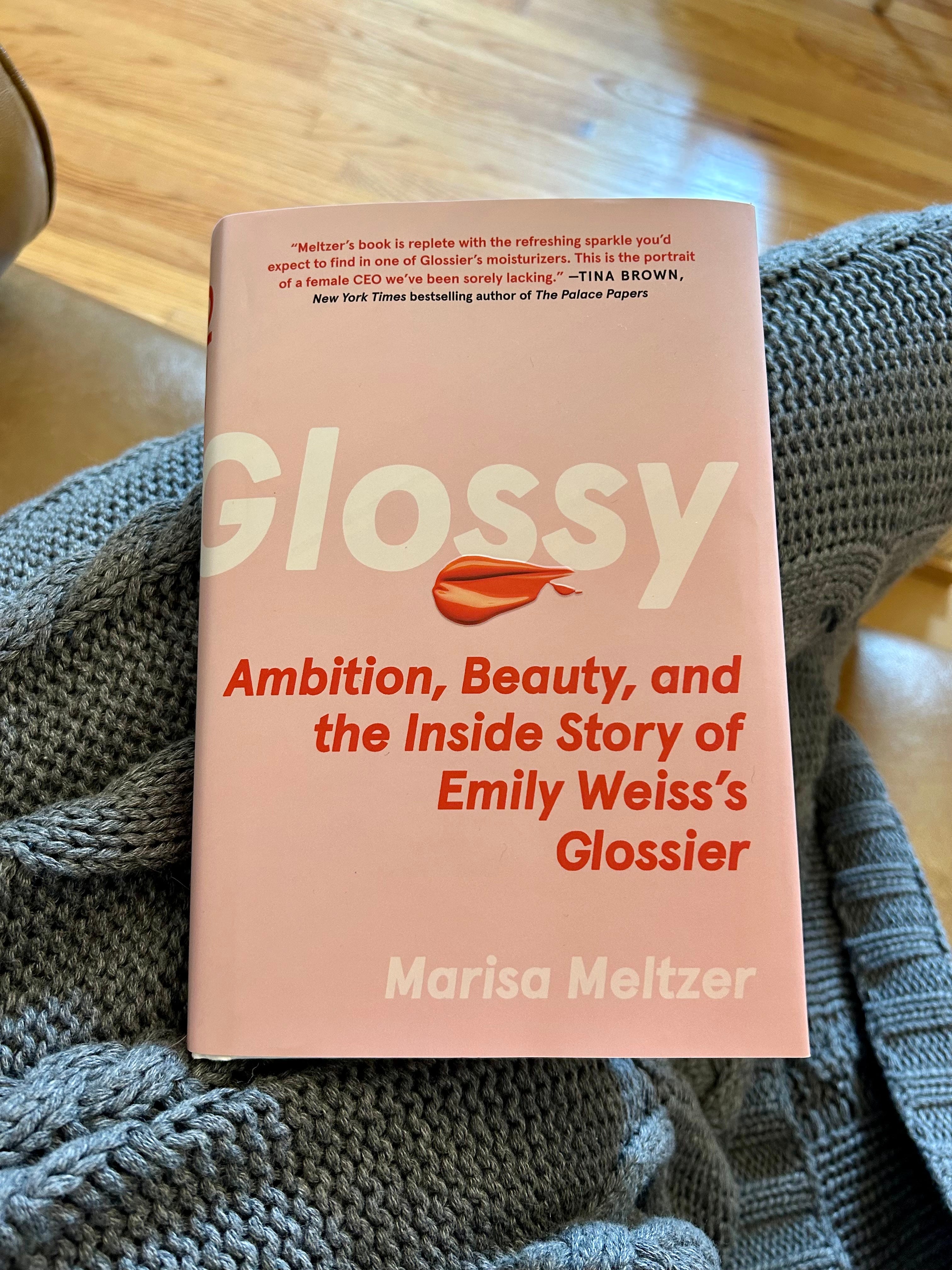
Still, this was a very fun read - I looked forward to picking it up every night - and it brought me back to the early days of Into the Gloss, fangirl-ing Weiss, and the joy of truly being excited about a company and their products, which were innovative in many ways. I liked the behind the scenes look into the ideation and creation of their products and their and new approach to branding and social media. Some of the gossipy aspects about the office culture, etc. were also fun - I always wondered what happened to their “Play” line. And I liked the bits of insight into Weiss’s background and life, despite the author’s off-putting “gotcha” tone, especially while conveying their interviews. Overall, it felt a bit light on material, but I still recommend it for early Into the Gloss/Glossier fans.
Taste test: “But, above all else, Emily Weiss has a great deal of choice in what she does. If she and her team did not think it would be advantageous for me to be in her home, getting her to weigh in on her personal life in some small way, she would not be dong the interview. She is not someone who does things she doesn’t want to do, but she also won’t hesitate to make me feel a little bit bad—trashy, overly curious, unfeeling—for being there in the first place.”
Can I interest you in dessert?
After reading Ghosts, I listened to Dolly Alderton narrate her earlier memoir, Everything I Know About Love (2018). From her many memories and anecdotes of her childhood through 20s, it was fun to recognize some as inspiration for her novel. And it was fun to spend more time with Alderton, and to laugh and cry with her. Some things were relatable and thus nostalgia-inducing (e.g. MSN Messenger). While less familiar to me, I was entranced by the closeness of her female friendships and the interconnectedness of their daily lives (as roommates and beyond) through their late 20s.
Taste test: “Life is a wonderful, mesmerizing, magical, fun, silly thing. And humans are astounding. We all know we’re going to die, and yet we still live. We shout and curse and care when the full bin bag breaks, yet with every minute that passes we edge closer to the end. We marvel at a nectarine sunset over the M25 or the smell of a baby’s head or the efficiency of flat-pack furniture, even though we know that everyone we love will cease to exist one day. I don’t know how we do it.”
Love this, Ellie. You make me want to read or listen to all of them.... Alec, too.